Lent is often described as a season of repentance — but many people hear “repentance” as shame, pressure, or spiritual self-improvement. This course begins somewhere else.
It begins with landscape: the places that shape our imagination, our history, our wounds, and our hope. It begins with the conviction that God meets us not only in ideas, but in the real terrain of human life — in dust and ice, in oceans and cities, in stories of conflict and courage, in communities longing to heal. And it begins with the HeartEdge instinct that transformation happens best when we learn to see abundance even in hard places, and to practise compassion, culture, congregation, and commerce for the sake of the common good.
Across six weeks we travel — in imagination and prayer — through six regions of the world. Each week offers a simple pattern: a map or image, a candle, a slow reading of the Gospel, and a Heartbeat-style conversation shaped by Wonderings. We listen to Scripture alongside voices from the land: people who have carried pain, resisted injustice, rebuilt trust, and learned the hard craft of peace-making. These are not “illustrations” to decorate our faith; they are teachers who help us see the Gospel more clearly.
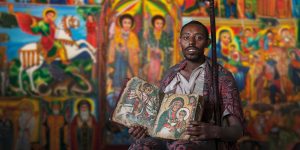
In Africa, liberation voices remind us that God is never neutral in the face of suffering. Truth-telling becomes penance, not to induce shame but to break the silence that protects injustice. We explore Ubuntu — “I am because we are” — and discover reconciliation as the communal work of restoring dignity, belonging, and life.
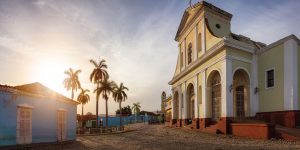
In the Americas, we hear the Gospel announced from the underside of history: good news for the poor, freedom for the captive, release for those burdened by systems that crush. Hope here is not optimism; it is resistance — practised through memory, lament, community, and courageous action.
In Asia, we learn to recognise blindness — not only in eyes, but in systems and assumptions — and to hear truth as something relational: a bridge rather than a weapon. We listen for the light that enters conflict, grief, and contested soil, and we practise “putting down stones”: moving from condemnation towards communion.
In Oceania, we are taught by sea and sky that relationship is everything. Peace is not passive calm but something cultivated — rongo, peace woven with justice. We learn language for the sacred space between us — the va — and explore reconciliation as the patient tending of relationships between peoples, with creation, and with God.
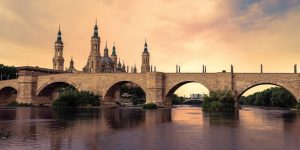
In Europe, a continent that remembers, we face histories that still ache: war, empire, displacement, exclusion. We are invited into humility — the posture of Christ who kneels — and into reconciliation that begins not with arguments but with service, hospitality, and truthful remembering.
Across all these landscapes, Lent becomes a journey in three movements:
Penance
is the courage to tell the truth — about ourselves, our communities, our histories, and our world — without despair and without denial.
Peace
is the practice of living differently — close to the ground, attentive to dignity, choosing presence over distance, listening over defensiveness.
Reconciliation
is the long labour of restored relationship — between neighbours, nations, cultures, and the earth itself.
This course does not ask participants to solve global problems in an hour. It offers something more realistic and more demanding: a way of being formed. A way of seeing. A way of becoming people who, week by week, learn to walk more gently, speak more truthfully, and love more courageously.
Because the world does not need more noise.
It needs people who can hold truth without stones,
practise peace without denial,
and choose reconciliation without naïveté.
May this Lent be a pilgrimage of the heart: across the world’s landscapes — and into the places in us where Christ still whispers, heals, and calls us to begin again