Week III • Tuesday
Costa Rica
Week III • Tuesday
Voices from the Landscape
I write these words from Costa Rica, my small but fierce corner of Latin America, where the mountains breathe cloud and the forests echo with the fragile beauty of creation. Here, the land itself teaches me what Franciscan penance means. Our rivers, wounded by pollution yet still flowing, remind me every day that God never stops leading us back to life.
Costa Rica is famous for abolishing its army. I grew up hearing stories of the day we chose books instead of weapons, dialogue instead of domination. That national decision formed me spiritually. It taught me that peace is not naïve but courageous; that reconciliation is not weakness but wisdom. This history shapes how I see penance—not as punishment, but as a return to Love that heals relationships.
In recent years, our country has not escaped the wider troubles of Latin America. Inequality grows, our young people feel discouraged, and the land groans under ecological strain. Migrants cross our borders in search of safety. I have seen their faces—tired, hopeful, carrying stories of loss. It was one of these encounters that reminded me of Francis kissing the leper. Something bitter became sweet. Conversion began.
Our forests reveal interdependence: every tree breathing life into another. Our seas remind us of fragility: coral reefs bleaching under waters that grow too warm. Leonardo Boff is right—“the cry of the Earth and the cry of the poor are the same cry.” In Costa Rica I hear both daily.
Yet amid all this, our people still say pura vida – a simple expression that, to me, carries the Franciscan flavour of gratitude. It is joy as resistance. It is hope refusing to die.
From this land, I hear the Spirit calling us again to remember, to turn, to reconcile, and to give thanks. Costa Rica is small, yes- but it whispers a gospel of peace for all of Latin America.
Br. Jorge Urrutia Castro TSSF
wonderings
- I wonder where the Costa Rican call to “remember who God is” resonates in my own landscape.
- I wonder how metanoia might change the way I see migrants, adversaries, or those I misunderstand.
- I wonder what relationships – social, ecological, personal—are waiting for reconciliation.
- I wonder what gratitude might look like as a form of resistance in my own life.
Reflection
The Costa Rican landscape helps us hear Jorge’s theology in a different register. His invitation to Franciscan penance is not a heavy burden but an opening, a widening of the heart in a time of fragmentation. The forests, migrants, rivers, and communities of Costa Rica become living commentaries on his fourfold path.
To remember who God is, we look first to creation. Costa Rica’s cloud forests refuse to let us forget divine tenderness – every leaf ornamented with moisture, every creature held within a delicate ecological embrace. As Clare and Francis knew, God’s mercy is often learned through attention to the natural world.
To repent means to see reality differently. Like Francis confronting the leper, we are invited to meet the migrant, the political opposite, or the ecological crisis with new eyes. In Costa Rica, where migratory routes from Nicaragua and beyond shape daily life, conversion becomes social: a shift from suspicion to solidarity.
To reconcile is to restore what has been broken. Costa Rica’s historical decision to dismantle its army is a national parable of reconciliation–choosing dialogue over weaponry, education over militarisation. In a region scarred by conflict and division, this choice becomes a quiet form of prophecy.
To give thanks is the most Franciscan response to crisis. Gratitude- pura vida- becomes an act of resistance against despair. As Jorge says, thanksgiving declares that God still acts, still leads, still accompanies.
Costa Rica reminds us that penance is not retreat from the world but engagement with it: humble, hopeful, healing. Its landscapes show us how Franciscan spirituality lands on real soil- where justice, ecology, tenderness, and fraternity meet. The Costa Rican voice invites us to believe that conversion is possible, peace is possible, and joy–even here–is possible.
prayer
Dios de misericordia y de nueva vida,
enciende en nosotros los ojos del amor.
Que recordemos tu ternura,
nos convirtamos con humildad,
sanemos lo que está roto,
y demos gracias incluso en tiempos difíciles.
Haznos instrumentos de tu paz
para nuestra tierra y para toda la creación.
Amén.
God of mercy and new life,
kindle in us the eyes of love.
Help us remember your tenderness,
turn with humility, heal what is broken,
and give thanks even in difficult times.
Make us instruments of your peace
for our land and for all creation.
Amen.
bible reading
John 4:43–54 :
Healing of the Official’s Son: Faith in Brokenness
The story of the official’s son begins in crisis and ends in the quiet unfolding of grace. A father, accustomed to command, finds himself powerless before the sickness of his child. He comes to Jesus not as a man of influence but as a parent on the edge of despair. Between Cana and Capernaum lies both geographical and emotional distance – the gap between human helplessness and divine compassion.
When Jesus says, “Go; your son will live,” he speaks not just healing but trust into that space of distance. The man believes and begins the long walk home, holding only a promise. But this journey becomes his conversion – from control to surrender, from status to vulnerability, from certainty to faith.
The writer Serene Jones, writing out of the pain of modern trauma, helps us see this story not simply as a miracle of physical healing but as a moment of grace meeting woundedness. In her book Trauma and Grace, she describes a world “shattered by pain,” where both bodies and imaginations bear the scars of violence, injustice, and fear. Healing, she argues, cannot happen through denial or pious platitudes. Rather, healing begins when we dare to tell the truth of our wounds in the presence of compassion.
That is what happens here. The father’s plea is a form of penance – not a self-blaming , but a truth-telling born of love. His confession, “Sir, come down before my child dies,” is an act of honesty before God. It is the recognition that we are finite, fragile, and in need of mercy, help and healing. Jones reminds us that confession is not a transaction but an opening. It is a willingness to let God’s love enter the broken places. The father opens that space, and Christ’s word fills it.
For Jones, penance is the beginning of resilience. It is the moment when the wound is named, when shame gives way to courage, when we dare to imagine that healing might be possible. This father’s faith is such an act. He walks into the unknown, trusting that love will hold what he cannot.
The peace that follows is not instant resolution but what Jones calls “the slow reconstruction of trust.” Jesus does not travel to Capernaum with the father . Instead , Christ’s word becomes the bridge. The father must live for a short time in the uncertainty of faith . He is walking the road between what has been promised and what is yet unseen. This is the peace that is born not of control but of relationship. It is the peace that comes when God’s love holds us while we wait.
And in the end, the healing extends beyond the boy’s body. The whole household comes to believe . Reconciliation spreads outward, as fear gives way to connection. For Jones, reconciliation is precisely this….not the erasing of pain but its transformation into relationship. She warns that “cheap grace” , forgiveness without truth , only deepens wounds. Real reconciliation, like this healing, involves honesty, courage, and the slow re knitting of trust.
Through the lens this Gospel sign becomes a story of embodied grace and love . The father’s faith, trembling and imperfect, mirrors the experience of every wounded soul learning to trust again. Healing begins when we speak our truth to Love and dare to walk home believing that grace travels with us.
So God is not a distant rescuer, but the one who meets us in the middle distance between fear and faith, holding our wounds with tenderness. Penance, peace, and reconciliation all flow from this meeting point, where human honesty and divine compassion embrace.
reflective action
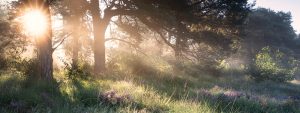
Find a green space- a garden, park, or even a single plant.
Spend time observing it silently.
Notice its interdependence: how it needs soil, water, light, breath.
Pray: “Teach me to live in harmony with all I meet today.”
Let that prayer shape one small gesture of reconciliation or kindness.
journalling prompt
Reflect on a moment when you “saw differently”:
a person, community, or issue that once felt distant or threatening but later became meaningful or compassionate. What changed your vision?
Where might God be inviting you to see with “the eyes of Love” today?
What visual response might you create as you reflect.