Week III • Saturday
California, USA
Week III • Saturday
Voices from the Landscape
Water: running, flowing, alive… and just at the edge of freezing. It was December, we were in the mountains, and a brave priest had granted my wish to be baptized by full immersion. It was also Southern California, so I don’t know why we didn’t just use one of the many private pools in my fancy suburban neighbourhood. I was eleven years old, and didn’t really think it through. But it had to be full immersion, or my fundamentalist best friend thought it wouldn’t “take.”
Since my lapsed Methodist parents hadn’t seen fit to get me baptized using any format, but my grandmother’s faith had skipped a generation and landed on me, I demanded that someone baptize me, immediately. And I remember coming out of that river making a strange, groaning sound as I struggled to breathe.
In the years since, I have sometimes marvelled at how that running, flowing, living water continues to spill from my heart to the world. A long career spent teaching race relations, opening university students’ eyes to the injustices that have been and continue to be part of the American story. I’ll never forget the class session when I introduced a racially mixed group of students to the history of lynching; many, including many Black students, had been completely unaware of it. Those are moments of grace, of living water flowing from my heart to the world.
But there have also been times when I’ve dammed up that river, and watched in sadness and shame as it narrows to a thin trickle. Another classroom, this time in Zimbabwe, where I’d taken a group of U.S. students to study for a few months. Our discomfort as the Zimbabwean students pointed out that their poverty and struggle was directly related to our patterns of consumption. My own involvement and complicity are often part of my confessions, but what does “amendment of life” look like when one is caught in a global system of injustice? It’s hard, so I sometimes just choose to ignore it.
But the water continues to flow, if sometimes underground.
wonderings
- I wonder where the living water in my own life is flowing freely—and where it has become blocked or hidden.
- I wonder what truths I am being invited to face with honesty this Lent.
- I wonder how reconciliation might begin in me: what relationships, habits, or assumptions need the softening of grace.
- I wonder what “amendment of life” looks like when I am caught in systems larger than myself.
Reflection
Theological Reflection on the Voices
Lent calls us into the kind of truth that makes peace possible. Not a gentle peace that avoids conflict, but the deep, reconciling peace that comes only when wounds are named and illusions washed away. The river in the story becomes more than memory—it becomes a sacrament of penance, a place where honesty and grace meet.
Flowing water refuses to let anything remain hidden. It reveals what has settled on the riverbed, what has been carried unexamined for years, what must be lifted into the light before healing can begin. That is the movement of true penance: not self-condemnation, but the courage to face the realities we would rather ignore—our complicities, our silences, our patterns of consumption, our instinct to turn away from the suffering of others.
Reconciliation begins in that same water. It softens what has grown rigid in us; it loosens the hardened sediment of defensiveness and shame. It teaches us that peace is not the absence of conflict but the presence of restored relationship—with God, with neighbour, with the wounded world.
And as the river keeps flowing, it invites us to carry its peace outward. We become bearers of healing water: listening where others have been unheard, confessing where harm has been done, and allowing God’s reconciling current to move through our lives into places still waiting for justice.
Susan Pitchford, Associate Teaching Professor Emeritas
prayer
Holy God,
let your living water wash through my life.
Uncover what has been hidden,
soften what has grown rigid,
and free what has become stuck.
Help me walk in truth, seek reconciliation,
and carry your peace into
the places that thirst for justice.
Amen.
bible reading
John 7:37–39 :
Let Anyone Who Is Thirsty Come to Me
On the final day of the festival, amid the solemn rituals of pouring water on the altar, Jesus stands and cries out, “Let anyone who is thirsty come to me, and let the one who believes in me drink. Out of the believer’s heart shall flow rivers of living water.” His voice interrupts the ceremony–not to reject it, but to fulfil it. The water once poured in memory of God’s provision in the wilderness now becomes the sign of something deeper: the Spirit of reconciliation that renews all creation.
The water Jesus promises is living, flowing, active. It is not stored in jars or controlled by temple gates. It is grace and love in motion. God’s justice becoming personal, social, and structural. The Spirit he speaks of is not a private comfort but a power that restores, heals, and transforms.
In the Latin American tradition of theology of reconciliation, Elsa Támez and Néstor Míguez remind us that reconciliation must go beyond words and sentiment. It must include structural repentance–the naming and dismantling of sin in systems, not just in souls. The living water of Christ cannot flow freely where power hoards resources, silences truth, or perpetuates inequality. True reconciliation, they write, requires not only forgiveness but justice: a turning of social, political, and economic realities toward the life-giving purposes of God.
Jesus’ cry, “Let anyone who is thirsty come,” is therefore profoundly political and prophetic. It is a declaration that divine grace belongs to all, not to the few who can afford purity or privilege. The Spirit’s water breaks through walls of class, gender, and race, washing away the divisions that deny others their humanity. Penance, in this sense, becomes the courage to name collective sin – to face the ways our societies thirst for peace while withholding justice.
Nancy Pineda-Madrid, writing from the borderlands of the United States and Mexico, carries this further. In Suffering and Salvation in Ciudad Juárez, she explores reconciliation after gendered violence and collective trauma. For her, living water is the Spirit’s flow through places of death–through the cries of mothers, the silence of loss, and the solidarity of those who refuse to forget. The Spirit does not erase pain; it gathers lament into power.
Pineda-Madrid teaches that penance in such contexts means standing with victims, allowing our hearts to be broken open by their suffering. It is solidarity, not sentimentality. The Spirit’s reconciliation, she says, is transformative–mirroring the hope of the resurrection–it brings life out of sites of violence through truth-telling, communal lament, and resistance to indifference.
Through these theologians, we begin to see Jesus’ promise of living water not as mystical escape but as restorative justice. The Spirit flows into the dry places of the world prisons, refugee camps, borderlands, and wounded communities–to irrigate them with dignity, mercy, and courage. This is water that carries memory and hope; water that names what is – wrong and refuses to stop flowing until healing comes.

reflective action
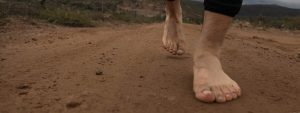
Take a short, slow walk—indoors or outdoors—and pay attention to the sound and rhythm of your footsteps.
With each step, name quietly in your heart one truth you need the courage to face.
With the next step, name one grace you long to receive.
Let the gentle rhythm of walking become a prayer for honesty, healing, and reconciling peace.
journalling prompt
Reflect on a moment when you realised your life was part of a larger story—of justice, harm, healing, or change.
Where was the “water” flowing in that moment?
Where did it slow to a trickle?
Write about one small, concrete step that could reopen the channels of compassion and truth in your life.