Week IV • Thursday
The Land of Palestine
Week IV • Thursday
Voices from the Landscape
I was driving the tractor on our farm. Suddenly my way was blocked by a young Israeli with an M16 rifle slung over his shoulder.
“What are you doing on our land?” he demanded.
“It is not your land;” I replied, “it is ours, and we have the deeds to prove it.”
“You may have all the papers, but God gave us this land; that is why it is ours and not yours.”
So writes a Palestinian farmer called Daoud Nassar at the beginning of his book in which he tells the story of a farm near Bethlehem that his family have owned since their grandfather bought the land in 1916.
Palestine is that stretch of land which lies between the eastern shores of the Mediterranean Sea and the Jordan River, and it is a land whose inhabitants have suffered from successive occupations over the centuries. It is now a territory which Israeli Jews have been colonising and appropriating for their exclusive use since the middle of the last century.
Since 1967, when the Israelis occupied the whole of what is called the Palestinian West Bank, Daoud and his family have been struggling to retain possession of what is legally theirs, but which is being coveted by Zionist Israelis who have already deprived many thousands of Palestinians of land once in their ownership.
Palestine was once a rather beautiful, largely agricultural country. Its people, mostly Arab but also some Jews – living peacefully side-by-side – had developed a distinctive culture and elegant architecture. Its peoples thrived, commercially and intellectually. Much of that has been lost through Israel’s colonization, with the purpose of supplanting everything Arab with everything Jewish.
Daoud again: “Most Palestinians have reacted to the present situation in one of three ways – the way of violence; the way of resignation; or the way of flight. My family and I have chosen a fourth way: to stay put and resist the occupation through active, non-violent resistance. We have chosen a path where we refuse to be anybody’s enemy.”
Bp Richard Llewellin
wonderings
- I wonder what it feels like to stand on land that carries the stories, names, and memories of generations before us all and then generations before you.
- I wonder how the Cross helps us see truth without turning away from suffering or injustice.
- I wonder what “staying” looks like in my own life – where I am called to remain steadfast rather than flee, fight, or give up.
- I wonder what the olive tree teaches us about rootedness, patience, and hope that grows even after being cut down.
Reflection
Richard Llewellin’s account of Daoud Nassar’s struggle for his family’s land reveals more than a political conflict; it opens a theological landscape where suffering, truth, and hope meet. When Daoud is stopped by a young soldier asking, “What are you doing on our land?”, the exchange exposes two theologies: one that uses God to justify possession, and another rooted in lived experience, memory, and dignity. Palestinian theology, as reflected in The Cross and the Olive Tree, begins not with entitlement but incarnation — with a God who dwells among the oppressed and knows the cost of being uprooted.
In this context, the Cross becomes a sign of truth-telling. It names injustice without illusion and reveals Christ present with those whose homes are threatened, whose fields are seized, and whose olive trees are cut down. The crucified Christ stands alongside those denied their rights and humanity. The Cross refuses to allow suffering to be sanitised or spiritualised; it insists that God is found with the wounded, not with the powerful.
Yet the Olive Tree stands with equal force. It symbolises the resilience and rootedness of a people who refuse to disappear. For families like the Nassars, tending the land is more than agriculture: it is prayer, identity, and a declaration of continued existence. The olive tree grows slowly, survives drought, and regenerates after being cut — an image of Palestinian hope that refuses despair.
Daoud’s “fourth way” of resistance — not violence, not resignation, not flight, but steadfast, non-violent presence — embodies this theology. It is a witness that insists on human dignity while refusing to become an enemy. This is costly hope: court battles, intimidation, destruction of crops, and the daily insistence on belonging. Yet it mirrors the theological vision emerging from Palestinian Christians: liberation as lived endurance, peace rooted in justice, and a faith shaped by ordinary people who hold their ground with courage.
In this light, the land of Palestine becomes a parable of faithfulness. The Cross exposes suffering; the Olive Tree reveals hope. Together they offer a way of seeing God at work in those who stay, resist non-violently, and continue to believe that justice and peace are possible even on contested soil.
prayer
God of the Cross and the Olive Tree,
root us in Your truth and
steady our hearts in the face of injustice.
Teach us the courage to stay,
the patience to hope,
and the love that refuses to make
anyone an enemy.
May our lives bear witness to Your peace,
deep as the soil and strong as the olive tree.
bible reading
John 9:13–34 :
Seeing Beyond the Walls
The story of the man born blind continues to unfold as a confrontation between truth and fear, illumination and denial. The man who now sees is brought before the religious authorities, questioned again and again, as though his healing were a threat. His neighbours, his parents, even his community draw back, uncertain, afraid of saying the wrong thing. The gift of sight exposes not only the darkness of his eyes but the blindness of the world around him. The miracle becomes a mirror in which everyone must face the truth about themselves.
This is the kind of story that Asian theologians recognise instinctively—a story not about individuals alone but about systems that cling to control and suppress compassion. The man’s healing reveals a truth that unsettles the powers; it breaks the moral order of purity, hierarchy, and unquestioned authority that keeps the vulnerable silent. The drama of John 9 moves from personal healing to communal crisis: a whole society struggling to cope with grace that refuses to fit inside its categories.
In the Korean theologian Andrew Sung Park’s terms, this is a moment when both sun (sin) and han (the pain of those who are sinned against) come into view. The Pharisees’ blindness is not simply theological misunderstanding—it is sun, the misuse of power that inflicts han on the healed man, turning his joy into interrogation. Their insistence on control, their refusal to believe the testimony of the one who was healed, deepens his suffering. True sight, in this context, becomes penance: the painful acknowledgment of our participation in systems that humiliate, silence, or scapegoat others. Reconciliation begins when light reveals the wounds of those long ignored and when those who wield authority dare to face their own shadows.
From Indonesia, Bernard Adeney-Risakotta would remind us that this story unfolds not in a moral vacuum but in a sacred cosmos. Every act of truth or falsehood ripples outward. To reject healing, to deny truth, is not only to wound a neighbour—it is to disturb the moral balance that connects all beings.
When the Pharisees refuse to see, they fracture the harmony of creation itself. In this sense, their blindness becomes ecological as well as ethical. Penance must therefore include a commitment to restore balance in the web of life: to heal relationships between people, between communities, and between humanity and God’s earth.
From the Philippines and across Asian feminist theology, Elsa Tamez and other scholars help us notice the quieter figures in the narrative—the parents who shrink back in fear, the neighbours who will not stand beside the healed man. Their silence is not apathy; it reflects the survival strategies of the powerless under domination. They know the cost of speaking truth to religious authority. Asian theologies, shaped by stories of colonisation, martial law, and dictatorship, recognise this silence as a symptom of collective woundedness. Reconciliation here cannot be mere politeness or surface harmony. It requires truth-telling, courage, and solidarity with those whose voices have been suppressed—including the man born blind, who becomes the unlikely prophet of the story.
And so John 9 becomes a parable for Asia and the world: illumination that exposes denial, truth that unsettles power, healing that challenges the very structures meant to protect the status quo. In this Gospel, real sight is not simply biological vision but the courage to recognise where God’s grace is breaking in—even when it disrupts our assumptions, our systems, and our comfort. The man born blind becomes a theologian of the streets, proclaiming not theories but what he has touched and known. His testimony still calls us to see again—to walk slowly, truthfully, and humbly into the light that heals both sin and han.
reflective action
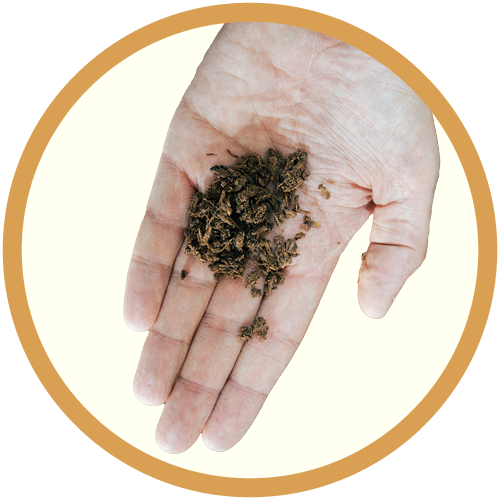
Take a handful of soil and hold it in your hands for a few moments.
Notice its weight, texture, and coolness.
Let it remind you of the land that carries people’s stories and struggles around the world.
As you hold it, silently commit yourself to one act of truth-telling or solidarity this week – something small, steady, and non-violent that aligns you with hope.
journalling prompt
Reflect on a place that has shaped you – a home, a landscape, a community.
Write or draw what it has taught you about belonging, resilience, or identity.
Where are you being invited, this Lent, to stand your ground with courage and tenderness?