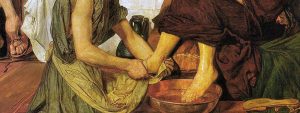
Holy Week • Maundy Thursday
Antarctica
Holy Week • Maundy Thursday
Voices from the Landscape
Guardians of a Fragile World
At the far edge of the earth, where wind sculpts snow into blue ice and silence stretches for miles, scientists work with quiet dedication. Their task is simple yet profound: to understand a fragile planet by listening to what is held in ice, air, and sky.
For me, it began in the 70s with an advert in New Scientist: “Observational physicists wanted to work in Antarctica.” After months of training with the British Antarctic Survey—instrument calibration and data logging—I boarded the RRS Bransfield for the voyage south.
When the ship left us, isolation became real. Twenty of us wintered together with no doctor, one annual supply visit, and a responsibility that never paused. Every three hours, in any weather, one of us stepped into the storm to read instruments in ice-buried huts. Inside, the data were coded and sent by Morse in a pre-satellite age.
In that landscape, watchfulness was life itself. I learned to read the sky, the wind, the light. Small signs mattered. A crack in the ice or a gust with the wrong tone could change everything. We kept vigil not only for the research, but for each other. To watch was to care.
Our work focused on weather and geophysics, and crucially, ozone measurements. Across three Antarctic bases we gathered the “ground truth” that calibrated satellites. From those disciplined observations came a discovery that reshaped global policy: the ozone hole over the Southern Continent.
We rarely spoke of heroism. We did what needed to be done, one reading at a time. Looking back, I see the significance: we were early witnesses to planetary change—keepers of truths the world needed to face.
Today, new generations continue this Antarctic vigilance, protecting the earth by watching closely, attending patiently, and telling the truth—one measurement, one icy step at a time.
Andy
wonderings
- I wonder what truths about the world- or about myself- I avoid because they feel too cold, too harsh, or too demanding.
- I wonder how God invites me to “keep watch” in my own life, as faithfully as those who step into the Antarctic night.
- I wonder what “ground truth” my community needs to face in order to seek healing and renewal.
- I wonder where creation itself is speaking, and whether I am listening.
Reflection
Antarctica and the Vigil
of Maundy Thursday
The Antarctic research teams teaches a particular kind of faithfulness—one carved out of silence, cold, and the steady rhythm of routine. The young scientist who spent two years in Antarctica lived by a rhythm that few on earth ever experience. Every three hours, through darkness, isolation, and storms that could erase the horizon, he stepped outside to observe the smallest shifts in sky, ice, and air. His vocation was simple and exacting: to pay attention. To watch without distraction. To let the truth speak.
Thomas Merton would recognise in this discipline the heart of contemplation. Merton wrote that true prayer is learning to “see what is”—to stand unshielded before reality without illusion or avoidance. In Antarctica, this posture was not an idea but a necessity. Silence was vast. Distraction was scarce. Truth was often uncomfortable: instruments revealed a damaged atmosphere long before the world wished to believe it. Yet the scientist’s task remained the same—steady, faithful watching.
This Antarctic vigilance offers us a window to see deeply into the heart of vigil of Maundy Thursday. We Remember Jesus asking his friends to stay awake with him- to keep watch in the darkness as truth draws painfully near. We recall their failure. Fatigue overwhelming them. Fear numbing them. Their eyes closing just when their presence mattered most. The contrast is striking: the scientist who steps out into a freezing night again and again, and the disciples who cannot stay awake for one hour. Both scenes speak to the human struggle with attention, with presence, with truth.
As our Lenten exploration of the landscapes of penance, peace and reconciliation comes closer to its climax we use the time of this Maundy Thursday watch to watch with Christ …to hold before God what he wants us to see and understand about penance, peace and reconciliation
Silent prayer on Maundy Thursday continues this ancient invitation. It is a practice of staying with Christ in the darkness- not to solve, not to escape, but simply to be present. Like watching the Antarctic sky, it is the training of the heart to remain awake, to receive reality as it truly is, and to hold that truth before God.
In this vigil, we learn what the ice teaches: that watchfulness is costly, silence revealing, and that presence is the first step towards healing and reconciliation
prayer
Holy One,
In the silence of distant places
and the stillness of our own hearts,
teach us to listen.
Give us courage to face the truths
that shape our world,
and tenderness to join Christ
in the healing of creation.
Keep us watchful, faithful, attentive,
and open to your transforming love.
bible reading
Maundy Thursday :
John 18:1–27
Maundy Thursday places us in a moment where everything changes. In Antarctica there are days when the air is crisp, the horizon endless, and the ice stretches in perfect stillness. Then, without warning, the katabatic winds fall from the high interior like an unleashed force. Calm becomes chaos in minutes. Visibility disappears. A person finds themselves surrounded by danger before they even realise the weather has turned.
The arrest of Jesus is such a moment.
The quiet of the garden gives way to the sudden descent of soldiers, torches, and tension. The disciples have barely caught their breath before the world tilts beneath them. Jesus stands exposed. So does Peter. Antarctica teaches that vulnerability often arrives abruptly—the moment the weather shifts, the moment the ice cracks, the moment courage collapses. Maundy Thursday is the gospel’s weather change. Everything that follows—trial, crucifixion, burial- begins in this night of cold air and flickering light.
John tells us that Jesus steps forward as the soldiers arrive. The theologian Moltmann sees here the God who refuses to hide from violence but places himself where danger is sharpest. “I am he,” Jesus says. Not a retreat, not a strategy, but sheer presence. Raymond Brown and Sandra Schneiders describe this garden as an “anti-Eden”: where the first Adam hid in shame, this Adam stands in the open and will not run. Divine love is revealed as fearless self-offering.
And then there is Peter. Let’s read this scene without harshness. Peter’s denial is not wickedness but human fragility under pressure. The courtyard is cold, the fire small, the questions pointed. Fear tightens around him like a sudden Antarctic wind, thinning his resolve. “I am not,” he says- three times undoing the “I am” that Jesus courageously proclaimed. His courage buckles, as human courage often does.
Jesus, meanwhile, protects his friends. Sam Wells’ theology of being with is written across this scene: “If you are looking for me, let these men go.” Before any cross is lifted, Jesus offers himself in their place. Being-with is not passive tenderness here—it is costly, risky, sacrificial presence.
This is the night when human strength proves brittle. The night when even the most committed disciple falters. Yet it is also the night when grace and love deepens. Where suffering intensifies, God comes closer, not further away. Christ does not stand above our trembling; he enters it. He shares the courtyard, shares the cold, shares the fear, shares the failure.
Antarctic research teams speak of the moment a storm hits: “Nobody is judged here. We survive because we stand by the weakest link.” In the gospel, Jesus stands by the weakest link too—the one who denies him. The garden and the courtyard become landscapes of exposed vulnerability, where God refuses to abandon the fragile.
Maundy Thursday invites us to that place. The place where courage falters. The place where fear speaks louder than conviction. The place where light flickers and wind rises.
And there…..right there…. Christ meets us. Not in our strength, but in our trembling.

reflective action
Set a timer for three moments in your day —morning, afternoon, and evening.
At each moment, pause for a time of attentiveness.
Step outside if possible.
Notice the sky, the air, the temperature, the sound around you. Let your body become an “instrument,” listening for God’s presence in the environment.
Offer a simple intention: “Help me see what is true. Help me love what I see.”
journalling prompt
Imagine a small Antarctic weather hut buried in snow – silent, exposed, essential.
Write about a place in your life or spirit where truth waits quietly to be noticed.
What instruments, inner or outer, help you hear what God is saying there?
What readings might you need to take?
What conditions might you need to brave?