John 21.15–19 : Tuesday after Easter
On Easter Day, our landscape began in ash. In the days that followed, colour slowly returned, drawn from the earth around us. Today’s gospel adds a deeper hue—a colour born not from brightness, but from depth, from what lies beneath the surface of loss.
In the deep ocean, far from light, there is a phenomenon known as whale fall. When a whale dies, its vast body sinks to the seabed, where it becomes nourishment for entire communities of life. In what appears to be an ending, bacteria, clams, crabs, and strange bone worms flourish. Death, here, is not sterile or final; it becomes the ground from which abundance emerges. Colour returns in the most unexpected place—the dark ocean floor.
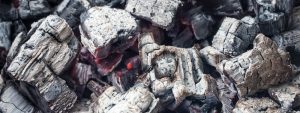
Peter’s encounter with the risen Jesus unfolds in a similar register. The charcoal fire on the shore carries the sharp smell of memory. It takes Peter back to another fire, another night, and his threefold denial. This is penance at its rawest: the past rising unbidden, the colour of shame flooding back in an instant. Peter cannot repaint this moment; he must stand within it.
Yet Jesus does not accuse. Instead, he asks a single question, repeated three times: “Do you love me?” Each question becomes a gentle stroke of grace, washing clean what was once burnt in fear. Like the whale fall, Peter’s failure is not erased but transformed. What seemed finished becomes nourishment for something new.
Jesus uses Peter’s birth name—Simon—taking him back to the beginning, before titles and expectations, before strength and collapse. Reconciliation does not rush forward; it returns patiently to the roots. And from that place, Peter is entrusted with care: “Feed my sheep.”
Life flows outward again, fed by grace rather than self-reliance.
In our post-Easter practice, this is the day when darker colours are allowed onto the page: blues, greys, deep browns drawn from soil, stone, and water. These colours do not diminish resurrection; they deepen it. They remind us that new life often grows from places we would rather avoid—regret, grief, endings we did not choose.
Resurrection, today’s gospel insists, is not about escaping death but about what God brings forth through it. Like the ocean floor transformed by a fallen giant, forgiveness becomes sustenance, and love is entrusted to those who know their own fragility.
As we add colour to our landscapes, we learn to trust that even what has broken us may yet become the place where others are fed—and where God’s grace proves most vividly alive.
Journalling Painting
- What colour from your landscape, physical, spiritual and emotional will you add to your Easter response painting today?