Week I • Friday
Arctic
Week I • Friday
Voices from the Landscape
Ittoqqortoormiit is on the front line of climate change. When I was there in 2018 the effects were clear: in recent years the sea ice has been freezing later and melting earlier and, for the first time that anyone could remember the ice in the bay in front of the village was breaking up in April. The sea ice that surrounds Ittoqqortoormiit for most of the year is essential to the inhabitants of the village, who travel and hunt on it. The Inuit in the Arctic are very dependent on hunting; agriculture is impossible here and there is limited availability of edible wild plants.
Unfortunately, declining sea ice means polar bears have changed their behaviour, bringing them closer to the village. In 2018, there had been several encounters with bears in Ittoqqortoormiit and a few years earlier the villagers had started a regular polar bear patrol to scare away bears, including keeping them away from the village school.
Like the ice, the community too has shrunk: there were around 500 people a few years ago; the population is nearer 350 today. Villagers used to be hunters, like their ancestors, but that is changing. Young people are leaving to find further educations and work elsewhere. There are problems with alcohol and violence. The suicide rate is high. The landscape is beautiful, but this is not paradise. This is a community that, like the ice, is slowly disappearing.
wonderings
- I wonder what the cracking of the ice is asking us to hear that we have not yet dared to face.
- I wonder how peace might look when it is held not by certainty, but by relationships strong enough to survive wind, grief, and change.
- I wonder what reconciliation requires of us when we cannot “fix” the damage but can choose to walk differently upon the earth.
- I wonder how Christ carries the pain of a melting world, and where we might recognise his presence among those who keep watch in the night.
Reflection
The voices from Ittoqqortoormiit reveal a people living where creation itself is in agony. In Inuit wisdom, sin is the tearing of right relationship—with land, animals, community, and Creator. When ice breaks up in April, when bears roam hungry through the streets, when young people must leave because home cannot hold their future, we are not just observing climate change; we are standing before a crucified landscape. The wounds of human excess, as writer Tore Johnsen reminds us, are inscribed in the very body of the earth. This is our collective penance, not a punishment sent by God, but the bitter harvest of what we have demanded of creation.
Yet the Spirit still broods over these troubled waters. Peace here cannot mean comfort or denial; it is the fragile balance of villagers watching through the night, protecting both children and bears, remembering old survival skills in a world that no longer behaves as it once did. As Nils Åge Aune suggests, such peace is provisional, held in relationships strong enough to endure wind and grief.
Reconciliation begins when we dare to bind heart and land together again, when we confess that our hope is entangled with the fate of melting ice and disappearing villages. In Christ, the One through whom and for whom all things were made, God steps into a wounded creation not to abandon it but to bear its pain and lead it, slowly, toward a new, healed communion.
prayer
O Christ,
who walks with us on uncertain ice,
teach us to hear the earth’s lament,
to honour its people,
and to mend what we have wounded.
Bind our hearts to the land,
strengthen our fragile peace,
and lead us into the slow work of reconciliation.
bible reading
Psalm 104:24–30
“When you send forth your Spirit, they are created;
and you renew the face of the earth.”
The second day of Lent invites us to breathe again and to recognise whose breath sustains us. Psalm 104 turns our attention to the Spirit of God who fills the world with life, and this becomes even more vivid when we hear it through the theology of Mark L. MacDonald, whose ministry in the Arctic taught him to see creation as a wounded yet living sacrament of God’s renewing work.
In the Arctic, renewal is not theoretical. After months of darkness and biting cold, the first returning light glimmers over frozen sea and snow-covered land. Indigenous Christians speak of this moment as a kind of resurrection—the world slowly inhaling again. MacDonald often wrote that the land itself participates in God’s healing: it remembers trauma, colonial rupture, and environmental harm, yet it also bears witness to God’s enduring presence through cycles of darkness and light.
Psalm 104 echoes this truth: life is always returning, carried on the breath of God.
In this way, sin is broken relationship—a break with God, with one another, and with creation. The wounds of residential schools, forced relocation, cultural suppression, and ecological destruction are not merely political wrongs; they are spiritual fractures. In such a context, this psalm’s affirmation that God “renews the face of the earth” becomes a hope for whole communities. Renewal is not a sentimental idea but a divine promise: God’s Spirit is still moving across Arctic lands, restoring dignity, truth, and the possibility of healing.
Psalm 104 shows us that the world is not held together by human power but by divine generosity. When God hides his face, the psalmist says, life falters; when God breathes, life springs up. So reconciliation is not something we manufacture. It is something we receive and pArcticipate in as the Spirit breathes through broken places. Reconciliation is a sacrament because it is the visible sign of God’s invisible healing at work in human and ecological relationships.
Lent often begins with a focus on our fragility. But this psalm, read through Arctic eyes, reminds us that fragility is not the end of the story. The Creator’s Spirit is continually recreating, restoring, reanimating what has been harmed—just as the land slowly brightens after the long winter, and communities find courage to tell the truth and seek justice.
To pray this psalm is to stand in the tension of Arctic reality:
we are dust, yet we are filled with divine breath; we are broken, yet we are held in a renewing creation; we are wounded, yet the Spirit is still moving across our lives like light returning over ice.
As Lent unfolds, may we trust the Spirit who renews the face of the earth—and who longs to renew the hidden, hurting places within us and around us.
reflective action
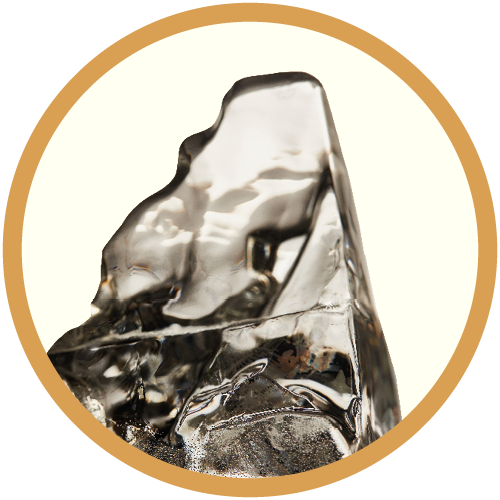
Spend time in silence imagining yourself standing on sea ice. Notice how it feels under your feet—solid, cold, yet fragile.
As you breathe in, pray, “Teach me to listen.”
As you breathe out, pray, “Teach me to walk gently.”
Afterwards, identify one tangible action—small but real—that helps repair relationship with the earth or with someone whose life is more vulnerable than yours.
journalling prompt
Where in my own life do I sense a thinning of foundations-places that once felt secure but no longer hold in the same way?