Week III • Friday
Long Island, USA
Week III • Friday
Voices from the Landscape
I am the land of the East End of Long Island, the sandy soil that once fed the First Peoples with corn and beans, and now grows the curated gardens of the powerful. I am the ground beneath all that is baked, broiled, harvested, and forgotten here. My story is held not in ink but in layers of seed, hunger, and memory.
To many eyes, I am simply The Hamptons—a landscape of artisanal bakeries, curated experiences, and the restless appetite of those who strive to be seen. I watch their hunger for status, for exclusivity, for more. It is a hunger that builds hedges tall enough to hide behind, believing that abundance can be hoarded without consequence.
But I hold older hungers.
Just beyond the hedges lies the sovereign land of the Shinnecock People. They remain here on their reservation, a living witness to endurance. At the centre of their survival sits fry bread—born not of ancestral grain, but of government flour forced upon the Diné during the Long Walk. What was given as meagre provision became a food of resilience, like Passover’s unleavened bread or the Eucharist’s simple loaf, carrying stories of suffering and survival.
Today, fry bread is reclaimed across First Nation communities. At the Shinnecock Powwow, it appears sweet or savoury, feeding the hunger for belonging, identity, and home within a homeland still contested. Yet I mourn: their ancient burial ground now lies beneath the manicured greens of the Shinnecock Hills Golf Club.
Across the water, on Shelter Island, another story lies buried—an unmarked plot where enslaved, indentured, and Indigenous people were laid to rest. Their hunger for dignity ended in silence.
I am a land shaped by appetite and absence, by abundance and loss. I witness both the hunger for more and the hunger simply to belong.
wonderings
- I wonder what the land beneath my feet remembers that I have forgotten.
- I wonder who hungers here—seen or unseen—and what that hunger is telling me.
- I wonder how bread made in suffering can still become a sign of resilience and hope.
- I wonder what table Christ is inviting me to sit at—and whom I must learn to listen to there.
Reflection
This land reveals an ancient question: who is fed, and who hungers? Whose table is set, and whose story is erased? The contrast between the wealth of the Hamptons, the poverty of the reservation, and the unmarked graves on Shelter Island exposes a deeper truth: economic hunger is never accidental. It is shaped by choices—by systems that determine who feasts and who cleans the crumbs.
Into this landscape, Jesus speaks: “I am the bread of life. Whoever comes to me will never go hungry.” These words are not an escape from physical need. They are a radical claim that the deepest hungers—belonging, dignity, justice, relationship with God—are met in him.
The living bread Christ offers is not soft spirituality. It is nourishment that transforms. It demands truth-telling about stolen land, buried ancestors, and labour hidden behind hedges. It calls us to see fry bread not as nostalgia, but as a testimony of survival formed from the ingredients of oppression. It reveals resilience as sacred, a sign of the God who refuses to cast out those the world rejects.
To eat this bread is to enter the work of reconciliation: honouring the forgotten, listening to the silenced, seeking justice for those who hunger still. It invites communities of privilege to sit not as benefactors but as guests—receiving stories, acknowledging harm, learning humility at tables they did not set.
Christ promises that all who look to him will be raised up. This is the hope of a shared feast: a table where dignity is restored, justice tasted, and relationship renewed. The Bread of Life is already present—but to be fed, we must recognise our shared hunger and gather at the tables where truth is told: a powwow, a memorial, a picket line, as surely as a cathedral.
Charlie McCarron
prayer
God of the hungry and forgotten,
open my eyes to the truth
in the land around me.
Teach me to honour those
whose stories lie beneath the surface,
and to share your justice
with humility and courage.
bible reading
John 6:25–40 :
“I Am the Bread of Life”
After the feeding of the five thousand incident, the crowd seeks Jesus again. They want more bread and more miracles – the comfort of full stomachs and visible signs. But Jesus invites them to hunger differently: “Do not work for the food that perishes, but for the food that endures to eternal life.” His words turn their attention from the surface of need to the source of life itself. Yet this is not a dismissal of physical hunger; it is its transformation into a vision of communion where both body and spirit are fed.
For Elsa Tamez, the Costa Rican–Mexican feminist liberation theologian, this is a moment where grace , love and justice meet. In her book The Amnesty of Grace, she argues that God’s grace is not passive pardon but active restoration . It’s grace that dignifies the excluded and restores their self esteem .
Penance, then, is not the crushing of the guilty but the lifting of the oppressed. When Jesus proclaims himself as the Bread of Life, he is not inviting people to forget their hunger but to discover in God’s gift the power to challenge the systems that perpetuate it.
In the crowd we see both privilege and poverty. There are both those who control bread and those who lack it. Christ speaks to all, calling the powerful to conversion and the hungry to hope. Tamez would say this is the “amnesty of grace” …the divine decision to begin again, to dismantle shame and exclusion, to turn scarcity into community. True reconciliation begins here, where grace restores the humanity of those who have been silenced and broken.
In the same way ,René Padilla, the Ecuadorian-Argentine theologian who shaped the idea of integral mission, adds a further insight from this reading : reconciliation is integration – gospel, justice, and peace woven into one fabric of being at one with God. Faith that remains spiritualised is incomplete; the Bread of Life nourishes the whole person and the whole world. Padilla insists that following Christ means living “mission between the times” – participating in God’s new creation while still surrounded by the hunger of the old world.
In this passage, Jesus embodies that integration. He holds together heaven and earth, soul and body, prayer and bread. He is the sacrament of divine wholeness. To receive him is to join the work of reconciliation . It is to make our faith tangible in acts of justice, hospitality, and creation’s care.
Through these lenses, penance becomes the turning of hearts from indifference to participation: learning to live as people who both receive and share God’s abundance. Peace becomes not quiet acceptance of inequality but the harmony that arises when every person and every creature is valued. Reconciliation becomes the rebuilding of community through grace that empowers, heals, and feeds.
reflective action
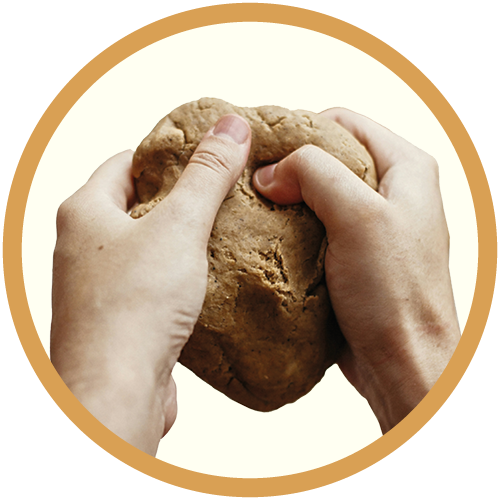
Break Bread Intentionally:
Share a meal with someone from a different part of your community’s story.
Listen. Let the act of eating together be a prayer of reconciliation.
journalling prompt
Christ says, ‘I am the bread of life.’
In this landscape of competing hungers —for status, for survival, for justice— what is the true nature of my own hunger?
How can I participate in the work of God to ‘lose nothing of all that he has given me’ but ‘raise it up at the last day’ (John 6:39) right here where I live?”