Week IV • Tuesday

Korea

Week IV • Tuesday

Voices from the Landscape

Korea’s story carries the ache of division, rapid transformation, and the unhealed pain of its people. The scars of colonisation, war, and the separation between North and South run deep, shaping generations with a collective han—that slow, sorrowful wound of unresolved suffering.

Beneath the glitter of modern technology and economic success, the nation still bears the weight of grief: families divided, elders haunted by memories of war, young people crushed by competition and loneliness, women and migrants struggling for dignity, and a land wearied by pollution and overwork.

This woundedness is not only social and political but profoundly spiritual. It is the darkness of exhaustion, resentment, and despair that calls for a light both gentle and just—a light that can reveal truth without condemnation, and bring healing where shame and silence have taken root.

Across Korea, theologians, artists, and peacemakers speak of the need for reconciliation as light entering the wound: a compassion that joins the people’s pain rather than judging it. It is this yearning for divine solidarity that Andrew Sung Park gives voice to in his theology of the wounded heart of God.

wonderings

  • Where in my life or community does han still dwell—pain unspoken, sorrow unacknowledged
  • How might the light of Christ enter those wounds without judgement
  • Can I believe that God’s own heart bears my darkness and longs to transform it

Reflection

The Light That Heals the Han

When Jesus says, “I am the light of the world,” his words speak into the heart of Korea’s story. For Andrew Sung Park, this light is not triumphal brightness but the radiance of compassion. God’s light does not stand apart from human agony; it enters it. It penetrates the shadows of han—the deep resentment, sorrow, and humiliation of the oppressed—and begins to transform them from within.

In Park’s vision, sin (sun) and suffering (han) are two halves of the same fracture. Sin wounds; han bleeds. Western theology often treats salvation as forgiveness for the sinner, but Park insists that true reconciliation must also bring healing to the sinned-against. At the cross, God bears both: the guilt of the oppressor and the grief of the oppressed. The heart of God itself becomes wounded, pulsing with the pain of the world.

To speak of light in such a context is to speak of presence, not conquest. The light of Christ does not banish darkness by force but illumines it with tenderness. It shines in hospital wards, in protest squares, in divided families; it flickers wherever people risk truth and forgiveness. In Korea’s wounds—and in our own—the divine light waits to be received.
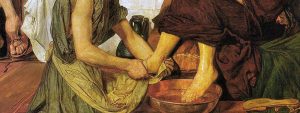
This is the light of reconciliation: God’s wounded love meeting human woundedness. It frees those who have harmed from guilt and those who have been harmed from bitterness, drawing both into mercy. Like Francis embracing the leper, it is a light that stoops low, that finds glory in the shared vulnerability of love.

prayer

Jesus, Light of the world,
shine gently into
the wounded places of my heart.
Let your compassion
touch the han I carry
and the hurts I have caused.
Heal me with your quiet radiance,
and help me walk today
in the light that brings
truth, mercy, and peace.

bible reading

John 8:12–30 :
The Light that Heals the Wounded Heart

In the temple courts, Jesus declares himself the light of the world. His words are not triumphal or abstract; they are spoken into tension, suspicion, and misunderstanding. The light he speaks of is not the glare of dominance, but the steady glow of divine compassion—a light that enters the world’s wounds.

Korean theologian Andrew Sung Park helps us read this passage with fresh eyes. He reminds us that brokenness takes two forms: sun, the sin we commit and the harm we cause others; and han, the suffering we bear and the inner darkness of those who have been sinned against. In the arguments around Jesus, both are visible: the defensiveness of the accusers and the fear of the oppressed. The crowd’s hostility exposes sun; the shame and silence of those unseen reveal han. Jesus’ light confronts both.

Park writes that God’s heart is wounded because the world is wounded. The divine light does not stand outside human pain; it bleeds with it. In Christ, light and darkness meet—the healer and the wounded become one. When Jesus says, “I know where I have come from and where I am going,” he names the source of his luminosity: communion with the Father. This is not self-assertion but transparency—a being fully known and loved.

Such light is gentle, not blinding. It enters hidden places where han festers—the bitterness of injustice, the weariness of those who have carried unspoken pain. For Park, the light of God is the dawn after the long night of han. It reveals without shaming, exposes without condemning. It is the light of solidarity—God’s wounded love shining from within the world’s suffering.

Francis of Assisi found divine light not in splendour but in humility. The leper’s embrace, the cave of solitude, the cross of poverty—these were his classrooms of illumination. In Franciscan vision, to follow the light of Christ is to move toward the wounded, not away from them. So too, Park’s theology teaches that reconciliation is born when we allow light into the han of our relationships, communities, and nations—when the suffering of one becomes the prayer of all.

Western theology often centres on forgiveness of the sinner. Park widens this vision: salvation means mutual liberation. Those who have done harm are freed from guilt, and those who have been harmed are freed from bitterness. Both meet in the wounded heart of God, where light becomes compassion and darkness becomes sacred space. To walk in this light is to let grace reveal our complicity and our pain, to let Christ hold both in healing love.


 

reflective action

Light a single candle or hold a small lamp in silence. As you watch its glow, name aloud or in your heart one wound—personal or collective—that longs for reconciliation.

Pray that God’s wounded light will shine gently there, bringing truth, forgiveness, and peace.

If possible, take one small act of kindness today toward someone from whom you feel distant or divided, allowing light to cross the boundary between you.

journalling prompt

Reflect on a place of woundedness—in yourself, your community, or your nation—where sorrow or resentment still lingers.
What might it mean for the light of Christ to enter that darkness, not to erase it, but to dwell within it with compassion?
How could that light begin to heal both the one who caused the hurt and the one who carries it?