Week VI • Tuesday
Joseph Emidy: from slave boy to musical star Cornwall, UK
Week VI • Tuesday
Voices from the Landscape
Joseph Emidy was born in West Africa and died in West Cornwall as a respected violinist and music teacher. His extraordinary life was shaped by the slave trade.
Captured by the Portuguese and taken to South America, he was spared hard labour because of his musical ability, performing for his master’s guests. Talent-spotted, he was brought to Lisbon to play in the Opera orchestra.
A visiting British admiral, captivated by his playing, kidnapped him for his ship. When the ship returned to Falmouth, the admiral—newly promoted—freed him. Emidy settled in Cornwall, becoming a popular musician and leader of the County orchestra.
He is now commemorated in Truro Cathedral with a roof boss showing Africa and a violin. His story has been used to remind Cornwall, especially during recent tensions over migrant workers, that the county has long benefited from welcoming newcomers and valuing their gifts.
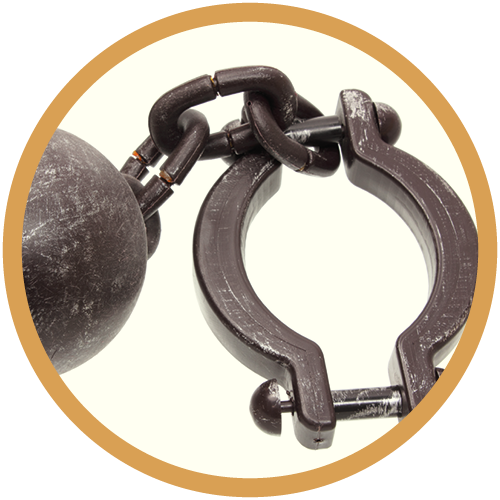
But celebrating Emidy must not obscure the horrors of slavery. The transatlantic trade enriched European nations at enormous human cost. Some estimates suggest up to two million people died on the “coffin ships,” not counting the millions who later perished from brutal conditions.
Today, Europe offers small acts of lament and occasional reparations, but these remain only faint gestures against the vast suffering caused by the trade in human lives.
wonderings
- How aware are you of the institutional links to slavery, empire, colonial mission
- What symbols, governance structures, theological curricula continue to reflect normative whiteness or European superiority
- What reparative justice could a European church offer in such a way as to act beyond token acknowledgment to structural change
Reflection
The Ghost Ship is a powerful and provocative book by Azariah France-Williams that links historical injustices of the transatlantic slave trade to present-day institutional culture. Many slaves died on route to the Americas due to the inhumane conditions on board and so the boats became known as ghost ships.
Williams examines the historical legacies of the slave trade including the British empire, colonialism of several European countries and how the Church benefited (directly and indirectly) financially through endowments shaped by colonial wealth and slave-derived capital He also demonstrates the way that symbols, iconography, leadership culture and theological education reflect whiteness, class privilege and power. He writes “Whiteness is a claim to power, it’s a claim to rightness.”
He goes on to use the description of ghost ship also for the ferry MV Christena which sank in 1970 between the Caribbean islands of St Kitts and Nevis, killing many. He uses the idea of a “ghost ship” — an unsafe vessel built on precarious foundations — as a metaphor to represent the church for many minority‐ethnic clergy: a vessel in which they were “passengers” or “crew” but lacked equal access or safety. A collection of testimonies from Black, Asian and Minority Ethnic (BAME) clergy and church workers reveals experiences of micro‐aggressions, invisibility despite visibility, tokenism, being sidelined, and the emotional and spiritual cost of navigating a mainly white clerical culture.
Slavery might appear to have ended but the legacy of displacement, economic imbalance, racialised hierarchies, institutional marginalisation persists. Not just in the Church of Engans but across European Institutions.
He argues that “ Unless the status attributed to being white is examined, the white historic Church will continue to both consciously and unconsciously limit the voice, action, and influence of her own non-white members …. And also of her women, her members of the queer community, her neuro-diverse, and those who live with disabilities.”
In an epilogue he offers hope with a visions of an alternative future — truth-telling, reparations, a genuine process of transformation, grassroots and leadership change. He invites the Church to repent, to listen, to restructure.
prayer
God of justice and mercy,
open our eyes
to slavery’s wounds
and our hearts
to Christ-shaped love.
Heal what history has broken
and make us agents
of truth and repair.
Amen.
bible reading
John 13:31–38
A New Commandment: Love That Reconciles
“When he had gone out…” It is after Judas has left the room that Jesus begins to speak of glory.
The door has closed behind betrayal, and yet Jesus does not turn to anger or despair. Instead, he offers a new commandment – a gift spoken into the fracture:
“Love one another. Just as I have loved you, you also should love one another.”
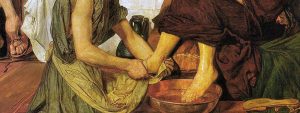
This love is not sentimental, nor is it safe. It is love that remains when trust has been broken. It is love that kneels to wash the feet of those who will fail and deny him. It is love that reconciles.
In John’s gospel , glory is not power or victory; it is the light that shines through vulnerability. The Cross will be the fullest revelation of that glory – not the defeat of love, but its
triumph through surrender. Jesus’ commandment is new because it calls us to love in this same way: not only as we wish to be loved, but as Christ loves . Love without measure, without precondition, and without end.
In the European story, these words echo through centuries of division and rediscovery. They have been whispered on battlefields and at peace tables, prayed in cathedrals and concentration camps, invoked by churches learning to confess their complicity in war, empire, and prejudice. Each generation must learn again what this new commandment asks of us.
Dorothee Sölle called this “political repentance” – the turning of faith from guilt to responsibility, from piety to action. To love as Jesus loves is to enter into the work of mending what has been torn: between nations, between faiths, between human beings and creation itself. Love becomes the form of penance, the ground of peace, and the heart of reconciliation.
After the Second World War, two European leaders stood together at Verdun – the French President François Mitterrand and the German Chancellor Helmut Kohl – holding hands in silence on the field where millions had died. That silence was a sermon. It was love made public: the kind of love Jesus spoke of, the love that reconciles.
“By this everyone will know that you are my disciples,” Jesus says, “if you have love for one another.”
Not by confession or creed, not by culture or nationality, but by love that endures the night and still chooses the dawn.
Europe’s landscape of faith is scarred and beautiful – marked by both crucifixion and resurrection. Yet through it all, this commandment continues to resound like a heartbeat:
Love one another. Love until it hurts. Love until it heals.
reflective action
Choose one small step today that honours those harmed by slavery: learning a story, naming an injustice, challenging a bias, or supporting a justice-focused group.
Let it be a step toward repair, not just awareness.
journalling prompt
Where do you see the legacy of slavery, past or present, shaping your community, church, or daily life?
Add something to your journal to explore where Christ’s command to “love one another” invites you to listen, learn, or act differently.