Holy Week • Monday
Antarctica
Holy Week • Monday
Voices from the Landscape
Antarctica is a land where truth stands unveiled. There are no forests to hide behind, no cities to soften the view. There’s only ice, wind, and the uncompromising clarity of light. Here the world seems stripped back to essence: starkness, silence, revelation.
The continent carries its history in frozen layers. Ice cores hold centuries of truth—volcanic ash, shifts in climate, the fingerprints of human impact—all preserved with a kind of holy accuracy. Nothing is forgotten. Nothing is hidden. In Antarctica, truth is not argued; it is witnessed.
The light is startling, almost sacramental. It refracts across blue crevasses and glitters on the ice shelves. Every shadow is sharp. Every flaw is seen. Antarctica is a place where revelation happens simply by standing still.
Yet this exposure is not cruel. It is clarity. It is honesty. It is the kind of truth that asks for wonder rather than fear. The melting glaciers, the shifting shelves, the fragile ecosystems all speak the language of unveiling—of judgment in John’s sense: an invitation to see clearly, to take responsibility, to begin again.
Antarctica becomes a silent prophet of Holy Week: a place where truth stands in the open, where light exposes without hatred, where fragility becomes a teacher.
wonderings
- I wonder what truths in my life or community remain buried beneath the surface, waiting to be revealed in God’s light.
- I wonder where I am tempted to choose safety over honesty, comfort over courage, silence over love.
- I wonder how Antarctica’s stark clarity might teach me to live more truthfully and more gently in the world.
Reflection
When the Gospel meets Antarctica, a shared truth emerges. Both call us into honesty. Both reveal what we might prefer to ignore. Both ask us to walk into the light with courage.
Antarctica teaches us that truth is not the enemy of hope. Its ice, like the cross, holds memory. Its melting through our use of fossil fuels, like Jesus’ hour, reveals the cost of human choices. It shows us that reality—once unveiled—demands response.
Barbara Brown Taylor’s insights echo here: transformation begins where illusions fall away. Antarctica is a landscape where illusions cannot survive. It sharpens the senses. It humbles the heart. Like Holy Week, it strips us back to what matters: truth, courage, compassion, responsibility.
Hans Küng’s universal vision also aligns with this landscape. Antarctica belongs to everyone and no one. Its call to truth is global. Its revelation is communal. In its vast equality, where all life depends on fragility, we glimpse the divine embrace: “I will draw all people to myself.”
To walk as children of light is to accept this invitation to clarity. To tell the truth with humility. To face reality without despair. To allow ourselves to be transformed by what is revealed—in Scripture, in creation, in our own hearts.
Holy Week begins in truth-telling. Antarctica reminds us how truth looks when unguarded. Jesus reminds us how love looks when unprotected. Together they lead us into the radiant vulnerability of God.
prayer
God of light and truth,
strip away our illusions as surely as
Antarctica strips the world to ice and sky.
Give us courage to face what is revealed,
and compassion to respond with love.
As melting ice exposes our impact,
and Holy Week unveils your heart,
lead us into clarity, honesty, and hope.
May we walk in your light with
humility and renewed purpose.
bible reading
John 12:27–36 :
The Hour Has Come
Holy Week begins with a troubled heartbeat. Jesus stands on the edge of his final days and speaks with the honesty of the psalms: “Now my soul is troubled.” This is not fear disguised, nor piety performed—it is lament, the kind the psalmists knew well. Like the psalmists, Jesus brings his whole self before God: the trembling, the uncertainty, the truth.
Yet he refuses to turn aside. “What should I say—‘Father, save me from this hour’? No, it is for this reason that I have come.” In these words, truth and vulnerability intertwine. Jesus accepts that love, when lived fully, will bring him into conflict with the powers of fear.
When Jesus speaks of “the judgment of the world,” he is not announcing destruction. In the liberal theological tradition, judgment is understood as unveiling—truth brought to light. Judgment is what happens when the world sees itself honestly: its violence, its exclusions, its false securities. The cross becomes the world’s mirror: revealing what harms, exposing what is false, and naming the powers that shrink from light.
Hans Küng hears in Jesus’ words a divine embrace rather than a divine threat. When Christ declares, “When I am lifted up… I will draw all people to myself,” Küng insists that this is God’s universal, boundary-erasing invitation. Judgment is not exclusion but liberation—truth breaking open what fear keeps hidden.
Then Jesus offers the heart of John’s Gospel: “Walk while you have the light… become children of light.” Light here is not about doctrinal certainty but lived truthfulness—compassion, humility, justice, mutual recognition. To be children of light is to walk the way Jesus walks: vulnerable, honest, courageous.
Holy Week is therefore not an escape from suffering but a journey into God’s vulnerability. Barbara Brown Taylor reminds us that divine presence is often revealed in the places we would rather avoid—the wilderness, the night, the cross. Jesus steps into darkness without losing sight of the light, teaching us that courage is not bravado but the determination to love when love is costly.
In this Gospel, weakness becomes revelation; vulnerability becomes glory. And the hour that has come is not the hour of defeat, but of love made visible—love walking into truth, into light, into the heart of the world.
reflective action
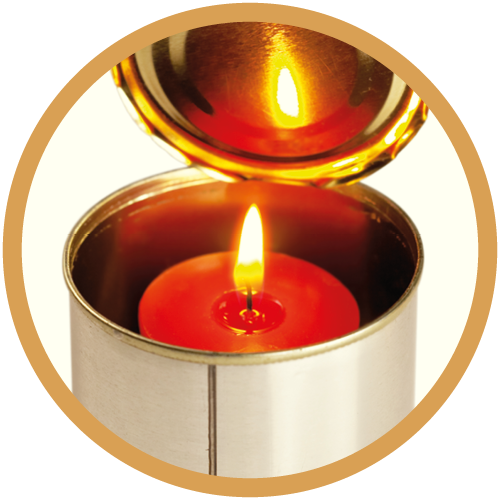
Sit quietly with a candle or a lamp for five minutes today.
Watch how the light reveals shape, detail, texture.
Ask God to show you one small truth that needs to be acknowledged—a word, a conversation, a memory, a step toward compassion.
Then take one real step into that truth, however small.
journalling prompt
Recall a moment when you faced a truth you did not want to see—in yourself, your relationships, your community, or your world.
What did that truth expose?
How did it change you when you finally acknowledged it?
Where might God be inviting you now to step into the light again?
How might you record your thoughts and let the truth speak without judgment.