Session III

Session III

Living Toward Death: Daily Kenosis and the many Transitus Experiences

Opening Prayer

(5 minutes)

Read slowly:

“My God and my All.”

— Francis of Assisi, Letter to the Entire Order

Sit quietly for a minute.


Personal Reflection

Reflect on the question:

  • What have I lost that I never expected to lose?

Write whatever comes to mind.
No discussion yet.


Introduction:

The many Transitus Moments

(15 minutes)

When people hear the word Transitus, they often think only of the final hours of St Francis of Assisi and his passage through death into the life of God. Yet Francis himself might invite us to see Transitus in a much wider way. The journey of passing over, letting go, and being transformed is not something that happens only once at the end of life. It is woven through the whole human experience.

Most of us encounter many moments of Transitus long before our final breath. Life rarely unfolds exactly as we imagined. There are dreams we once cherished that never come to fruition. There are relationships that end, sometimes gently and sometimes painfully. There are seasons when health declines, strength diminishes, or abilities we once took for granted begin to fade. There are roles and identities that shaped us for years—a job, a ministry, a family responsibility—that eventually come to an end. There are expectations about ourselves, other people, and even God that are challenged or shattered by experience.

These moments can feel like small deaths. Something that once gave meaning, security, or direction is no longer there. We find ourselves standing in unfamiliar territory, grieving what has been lost and wondering what comes next. Such experiences are often accompanied by sadness, confusion, anger, disappointment, or fear. We may wish to return to what was, yet discover that there is no path back.

And yet, if we look carefully at our own lives, we may notice that some of our deepest growth has emerged from precisely these places. The loss of one dream may have opened the door to a vocation we could never have imagined. The ending of one chapter may have created space for new relationships, new wisdom, or a deeper dependence on God. What first appeared to be an ending gradually became a beginning.

This is the heart of Transitus. It is not simply about loss. It is about passage. It is about crossing from one place to another, often without knowing exactly where we are being led. It is the movement from what was familiar into what is still unfolding. Like Abraham leaving his homeland, like the disciples leaving their fishing nets, like Francis stripping himself of privilege and security, we are invited again and again to trust God in the midst of transition.

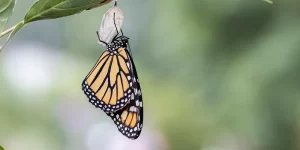
The Christian story is filled with such moments. Good Friday leads to Easter. The seed falls into the earth before it bears fruit. The caterpillar enters the darkness of the chrysalis before becoming a butterfly. Again and again, God works through endings, not to diminish life, but to deepen and transform it.

Perhaps one way of understanding our spiritual journey is to recognise these many Transitus moments when they appear. They are rarely comfortable. They often arrive uninvited. Yet they may become sacred thresholds through which God leads us into greater freedom, wisdom, compassion, and trust.

As we reflect today, we might ask ourselves: What Transitus moments have shaped my own life? What have I had to let go of? What passages have I already travelled? And where might God be inviting me to trust the next crossing that lies ahead?

For Francis, death itself would eventually become the final Transitus. But he was able to welcome Sister Death because he had spent a lifetime practising smaller acts of letting go, surrender, and trust. The final passage was simply the completion of a journey he had been walking all along.


Timeline Exercise

(10 minutes)

Draw a simple timeline of your life.
Mark significant transitions or endings.

These might include:

  • Leaving home
  • Marriage or divorce
  • Bereavement
  • Illness
  • Redundancy/being laid off
  • Retirement
  • Children leaving home
  • Church disappointment
  • Changes in faith
  • Loss of independence

You do not need to share everything.
Simply notice the pattern.


Wondering

  • Which transition shaped me most deeply?
  • Which one still feels unfinished?
  • Where was God in that experience?

Reflections

(10 minutes)

Let’s return to the theme of kenosis, which we considered in the last session.

This self-emptying is not weakness. Nor is it a rejection of life. Rather, it is the deepest expression of love. Love always involves a kind of emptying. A parent gives themselves for a child. A friend makes room for another’s needs. A caregiver offers time, energy, and attention. Wherever genuine love exists, there is some measure of kenosis—a willingness to make space for another.

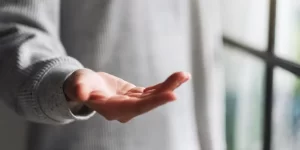
St Francis recognised this truth and sought to shape his whole life around it. It is one of the great insights of his spirituality: when we stop grasping, our hands become open. Open hands can receive. Open hands can share. Open hands can bless. The poor Christ whom Francis loved showed him that true richness is not found in accumulation but in openness to God and neighbour.

Kenosis therefore is not self-destruction or self-denial in a negative sense. It is not about making ourselves smaller because we have no value. Rather, it is the deliberate choice to place love above self-protection. It is the movement from grasping towards openness, from possession towards gratitude, from control towards trust.

Throughout life we are invited into this practice of letting go. Sometimes we choose it willingly. At other times life chooses it for us. We let go of one stage of life and move into another. We release old identities and discover new callings. We surrender expectations that no longer fit the reality before us. We learn to live with uncertainty. We learn that not every question will be answered and not every dream fulfilled.

In this sense, kenosis becomes preparation for every Transitus moment we encounter. Each act of letting go teaches us something about trust. Each surrender reminds us that our lives rest not in our own control but in God’s faithful hands. The more we learn to live with open hands, the less frightening change becomes. We begin to discover that beyond every ending there is the possibility of new life.

For Francis, this lifelong practice of self-emptying prepared him for his final journey. Because he had spent years releasing wealth, status, certainty, and control, he was able to welcome even Sister Death as part of his return to God. His final Transitus was not an isolated event but the culmination of a lifetime of kenosis.

Perhaps the invitation for us is not to wait until the end of life to learn this wisdom. We are invited to practise it now. In small acts of generosity. In moments of forgiveness. In accepting change. In releasing what can no longer be held. In trusting God with the future we cannot see. For every act of kenosis becomes a doorway into deeper freedom, deeper love, and deeper life.


Wondering

  • What am I currently trying to hold onto?
  • What might God be inviting me to release?
  • What would living with open hands look like?

(10 minutes)

Western culture often celebrates youth, achievement, productivity, and independence. Success is frequently measured by what we can accomplish, how much influence we possess, how quickly we can move, and how visible we remain. Ageing can therefore feel unsettling because it gradually takes away our ability to meet the standards society has for a person’s value.

Franciscan spirituality offers a different perspective. Rather than glorifying perpetual youth, it honours wisdom, maturity, gentleness, and the slow deepening of the soul. The Franciscan tradition recognises that some of life’s greatest lessons are learned not through strength but through vulnerability, not through acquiring more but through learning to let go. Elder-hood is not simply about growing older. It is about growing deeper.

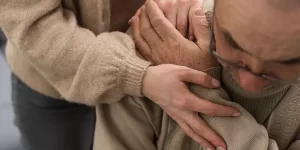
Yet the reality of ageing is rarely straightforward. It often involves a series of losses, each one requiring adjustment and acceptance. Health may no longer be as reliable as it once was. Energy can diminish. Tasks that were once effortless may require planning and determination. Physical appearance changes. Memory becomes less certain. Familiar roles and responsibilities pass to others. Careers come to an end. Children grow more independent while we grow less independent. Friends die. Communities change.

Many people also speak of another loss that is harder to name: the experience of becoming increasingly invisible. A person who was once consulted, admired, or needed may discover that society no longer pays the same attention. The culture that celebrates novelty can sometimes overlook the wisdom of those who have travelled long roads. This invisibility can be painful. It can feel like a kind of bereavement.

aced with such losses, the temptation is often towards bitterness, resentment, or regret. We may find ourselves dwelling on what can no longer be done, who we once were, or opportunities that have passed. We may become trapped in comparisons between the present and the past. Ageing can then appear as a story of decline and diminishment.

The Christian and Franciscan tradition offers another possibility. It asks whether these losses might become places of transformation rather than defeat. What if the gradual relinquishing of strength, status, certainty, and independence is not simply something happening to us, but also something that can happen within us? What if these experiences become opportunities to learn trust more deeply? What if they become invitations into a different kind of freedom?

Saint Francis himself understood this journey. In his final years he experienced failing health, increasing weakness, chronic pain, disappointment within his own Order, and the loss of much that he had once enjoyed. Yet these experiences did not destroy him. Instead, they deepened his dependence upon God. As external strength diminished, an inner freedom grew. He learned more fully what it meant to live as a creature receiving everything as gift.

Perhaps this is one of the hidden vocations of elder-hood. The world often values people for what they do. God values people for who they are. As familiar roles fall away, we may be invited to discover that our deepest identity was never rooted in achievement, usefulness, or success. It was always rooted in being beloved by God.

Seen in this light, ageing becomes a series of Transitus moments. Each loss is a crossing. Each surrender is a passage. Each ending invites us into a new relationship with ourselves, with others, and with God. The question is not whether we will experience these transitions. We all will. The deeper spiritual question is how we will travel through them.

Can the loss of strength teach us dependence upon grace? Can the loss of status teach us humility? Can the loss of certainty teach us trust? Can the experience of becoming less visible to the world help us become more attentive to the presence of God?

Ageing may not be a failure to remain young. It may instead be God’s gentle invitation into wisdom. The many losses that accompany later life can become not merely signs of decline but moments of Transitus—sacred passages through which we are slowly prepared for our final homecoming in God.


Wondering

  • What gifts have come through ageing?
  • What losses remain difficult?
  • How might these losses become places of grace?

Reflective Action

What have my Losses Taught Me?

(10 minutes)

Choose one significant loss from your life.
Reflect quietly.

  • What did I lose?
  • What did I learn?
  • How was I changed?
  • Where was God?
  • What grace eventually emerged?

Spend a few minutes writing.


Daily Practices of Letting Go

(5 minutes)

We prepare for death by learning to let go now.
Small practices matter.
Listening rather than controlling.
Forgiving rather than keeping score.
Giving rather than accumulating.
Accepting limitations.
Receiving help.
Living gratefully.
Each becomes a small rehearsal for trust.


Commitment

Complete the sentence:

This week I will practise letting go by…


Closing Prayer

Lord Jesus Christ,
You emptied yourself in love.
Teach us to let go of what we cannot keep,
so that we may receive what cannot be lost.
Help us recognise your presence
in every ending,
every transition,
every Transitus.
May the small deaths of today
prepare us for the great homecoming of tomorrow.
And may we learn,
like Francis,
to live with open hands.
Amen.

Final wondering

  • If Sister Death were to meet me today, what part of my life would she recognise as already learning how to let go?
Introduction

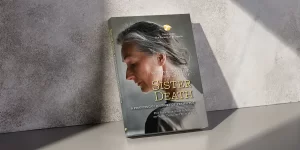
Five Franciscan Study Reflections on Death, Dying, and Trust in God

Session III

Living Toward Death: Daily Kenosis and the many Transitus Experiences

MENU